
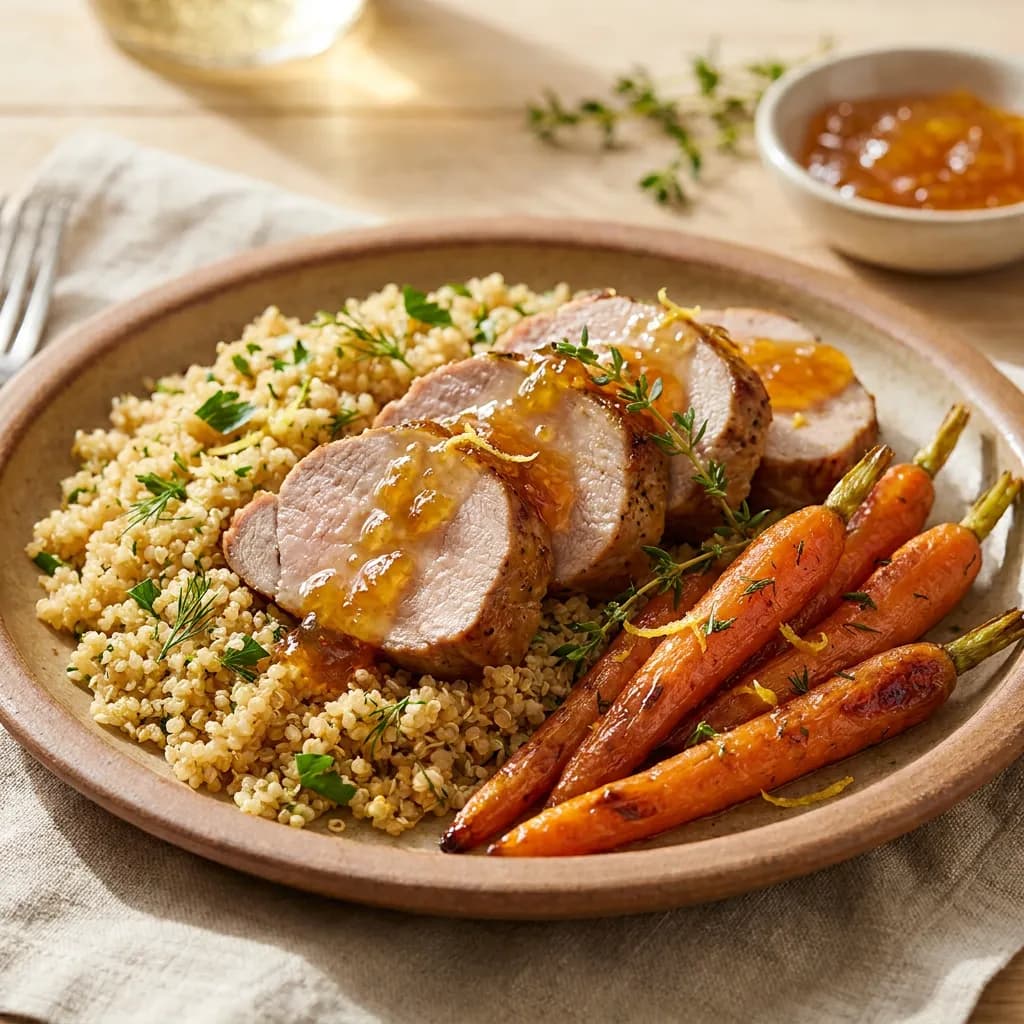
Creato con AI
Lemon Marmalade Pork Tenderloin with Herbed Quinoa and Carrots
55 min 558 kcal a porzione Medio
Ingredienti
4 Porzioni
- Trimmed pork tenderloin680 g
- Homemade lemon marmalade100 g
- Extra-virgin olive oil1 tablespoon
- Dry quinoa180 g
- Carrots600 g
- Certified gluten-free Dijon mustard2 tablespoons
- Garlic2 cloves
- Fresh thyme leaves1 tablespoon
- Kosher salt1 teaspoon
- Black pepper0,5 teaspoon
- Water360 ml
Istruzioni
- 1
Preheat the oven to 220°C (425°F). Line a large rimmed baking sheet with parchment paper or foil.
- 2
Peel the carrots and cut them into evenly sized sticks. Toss them with 2 teaspoons of the olive oil, 1/4 teaspoon of the salt, 1/4 teaspoon of the black pepper, and 1 teaspoon of the thyme. Arrange them on one side of the prepared baking sheet.
- 3
Roast the carrots for 10 minutes while you prepare the pork and glaze.
- 4
Mince the garlic. In a small bowl, combine the lemon marmalade, Dijon mustard, minced garlic, and half of the remaining thyme. Divide this glaze between two clean bowls so glaze used on raw pork does not contaminate the portion reserved for serving.
- 5
Pat the pork tenderloin dry. Rub it with the remaining 1 teaspoon olive oil, 1/2 teaspoon salt, and remaining 1/4 teaspoon black pepper.
- 6
Remove the baking sheet from the oven, stir the carrots, and place the pork beside them. Brush the pork with the glaze from the first bowl. Roast for 15 minutes.
- 7
Meanwhile, rinse the quinoa thoroughly under cold water. Place it in a saucepan with 360 ml water and the remaining 1/4 teaspoon salt. Bring to a boil, cover, reduce the heat to low, and simmer for 15 minutes. Remove from the heat and let it stand, covered, for 5 minutes.


